Linguistic Analysis
Tara, Trinity & Colin
DIGIT 210
What is a Jupyter Notebook?
A Jupyter Notebook is an interactive coding environment that allows us to combine Python code, written explanations, and visual outputs (such as graphs) in one place. In this project, we used a Jupyter Notebook to analyze dialogue patterns in Adventure Time by processing text files, cleaning data, and calculating word frequency.
What Our Notebook Does
Our notebook begins by importing required Python libraries such as os,
sys, Counter, and matplotlib. It also connects to a
folder of custom scripts (ATE modules) used for text processing.
Next, it loads multiple Adventure Time episode text files and applies
preprocessing functions to clean and standardize the data. Each script is
processed and stored in a list for analysis.
After processing, all
text is combined into a single corpus. The notebook then splits the corpus into
individual words and uses a frequency counter to identify the most common words
in Season 1.
Finally, the top 20 most frequent words are visualized
using a bar chart with Matplotlib, allowing us to see patterns in character
dialogue and language use.
Jupyter Notebook
This notebook performs text processing and frequency analysis on Adventure Time scripts using Python. It imports multiple modules, processes raw script files, and visualizes word frequency patterns.
Corpus Analysis: Adventure Time
Season 1
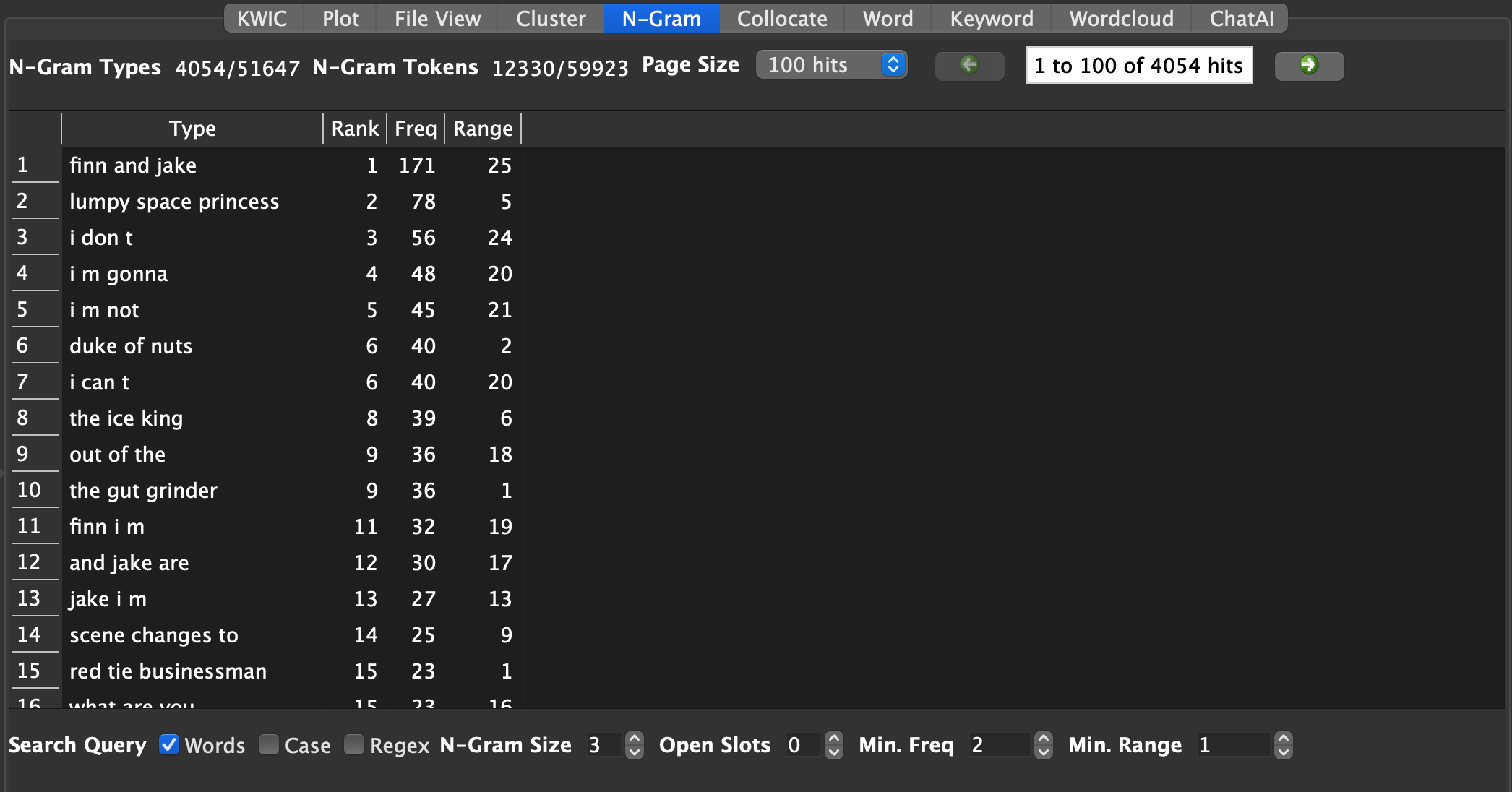

The corpus analysis for Season 1 shows that the language of Adventure Time is heavily centered around its main characters, especially Finn and Jake, who appear together more frequently than any other phrase. This suggests that the show is strongly character-driven and focuses on their relationship rather than isolated individual actions. The dialogue is also very informal and repetitive, with phrases like “I’m gonna,” “I don’t,” and repeated expressions like “no no no” or “ow ow ow.” This reflects a conversational and exaggerated speaking style that matches the show’s chaotic and comedic tone. Additionally, characters frequently express actions and intentions, which contributes to the fast pacing of the episodes.
Season 2
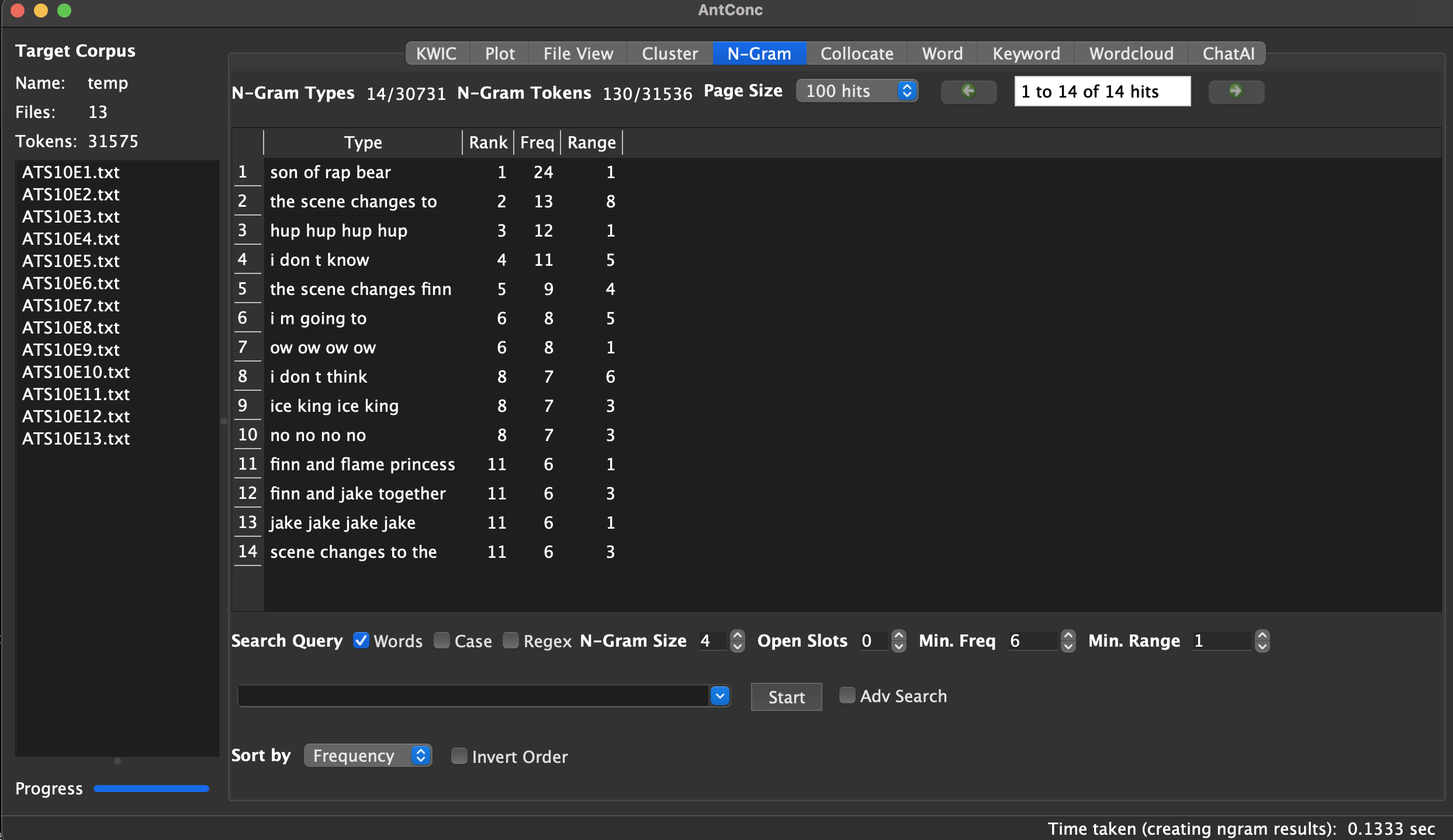
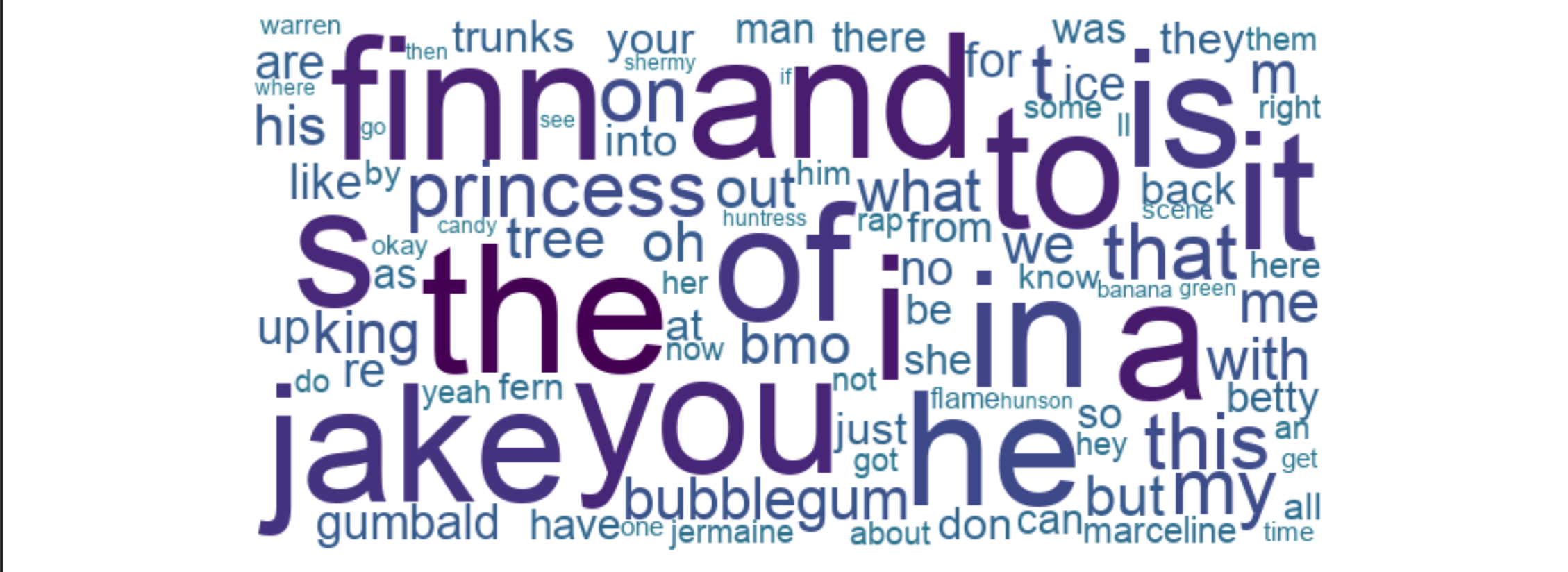

The corpus analysis for Season 2 shows that the show remains focused on Finn and Jake, but begins to expand its character relationships and narrative complexity. New combinations like “Finn and Flame Princess” suggest a broader range of interactions compared to Season 1. The dialogue continues to be informal and repetitive, but includes slightly more variation in expression. Phrases like “I don’t think” and “I don’t know” appear more frequently, which does show a shift toward more developed dialogue.
Comparison
When comparing both seasons, Season 1 is more centered on simple, repetitive dialogue and the core duo of Finn and Jake, while Season 2 introduces more varied character interactions and slightly more complex storytelling.