Workflow
DIGIT 210 Project Development
Project Overview
This page documents the development workflow of our project across multiple weeks. Our team divided responsibilities, maintained a shared repository, and iteratively built both our dataset and our analytical tools. Each milestone reflects progress in data collection, text processing, visualization, and web development.
Week 1 Milestone
Tara: Created the GitHub repository with Trinity, Colin, and Dr. B. Set up the project structure and initialized the README file with an overview of the project.
Colin: Joined the repository and created the initial website splash page.
Trinity: Joined the repository and began developing initial scripts for text processing and analysis.
Week 2 Milestone
Tara: Added Season 1 text files to begin building the corpus and created supporting documentation.
Colin: Updated the README file and improved the structure of the splash page.
Trinity: Developed markup structure and created a working branch for development.
Week 3 Milestone
Tara: Continued expanding project documentation and tracking overall progress.
Colin: Applied regular expressions (Regex) to process and structure text data.
Trinity: Used AntConc to analyze the corpus and identify linguistic patterns.
Week 4 Milestone
Tara: Resolved Git branch merges and began documentation for the Jupyter Notebook.
Colin: Finalized SVG pipeline for visualization output.
Trinity: Added Season 10 of Adventure Time to the dataset.
Week 5 Milestone
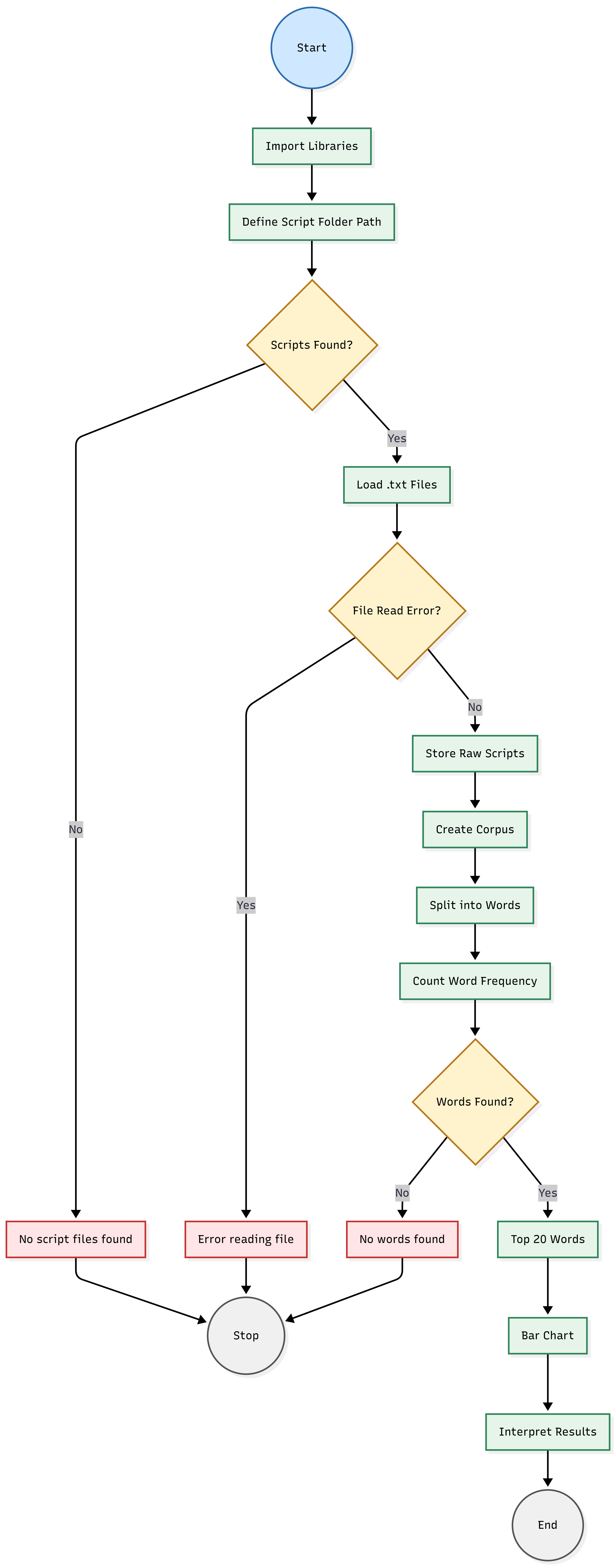
Tara: Developed a Jupyter Notebook to calculate the top 20 most frequent words in Season 1.
Colin: Continued refining regular expressions for improved text processing and structure.
Trinity: Began web scraping additional data for Adventure Time Season 10.
Week 6 Milestone
Tara: Planned the main page layout and assigned final project tasks to team members.
Colin: Added Cytoscape network visualization, improved reflections, and included alt text for accessibility.
Trinity: Finalized web scraping and continued working with AntConc for corpus analysis.
Week 7 Milestone
Tara: Created GitHub Issues outlining remaining tasks for each team member.
Colin: Continued improving reflections and accessibility captions across the site.
Trinity: Finalized data collection and continued AntConc analysis of the corpus.
Week 8 Milestone
Tara: Finalized project goals and created a GitHub Issue summarizing final deliverables.
Colin: Added Cytoscape network visualization and legend to the Character Analysis page.
Trinity: Refined website styling using CSS and added AntConc images and explanations to the Linguistic Analysis page.
End of Project
As a team, we refined our dataset, improved markup consistency, and enhanced analytical tools. We also finalized this website to clearly present our research questions, methods, visualizations, and findings. Special attention is being given to ensure accessibility, proper documentation, and clarity.
What We Learned
Through this project, we learned how to build a digital humanities workflow that moves from raw text to structured data and visualization. We used regular expressions (Regex) to clean and organize dialogue data, which helped us identify patterns in character speech. We also worked with Jupyter Notebooks to combine Python analysis with documentation, and used tools like Cytoscape to turn our data into network visualizations. Overall, we learned how pipelines connect data collection, processing, and interpretation to support meaningful analysis.